
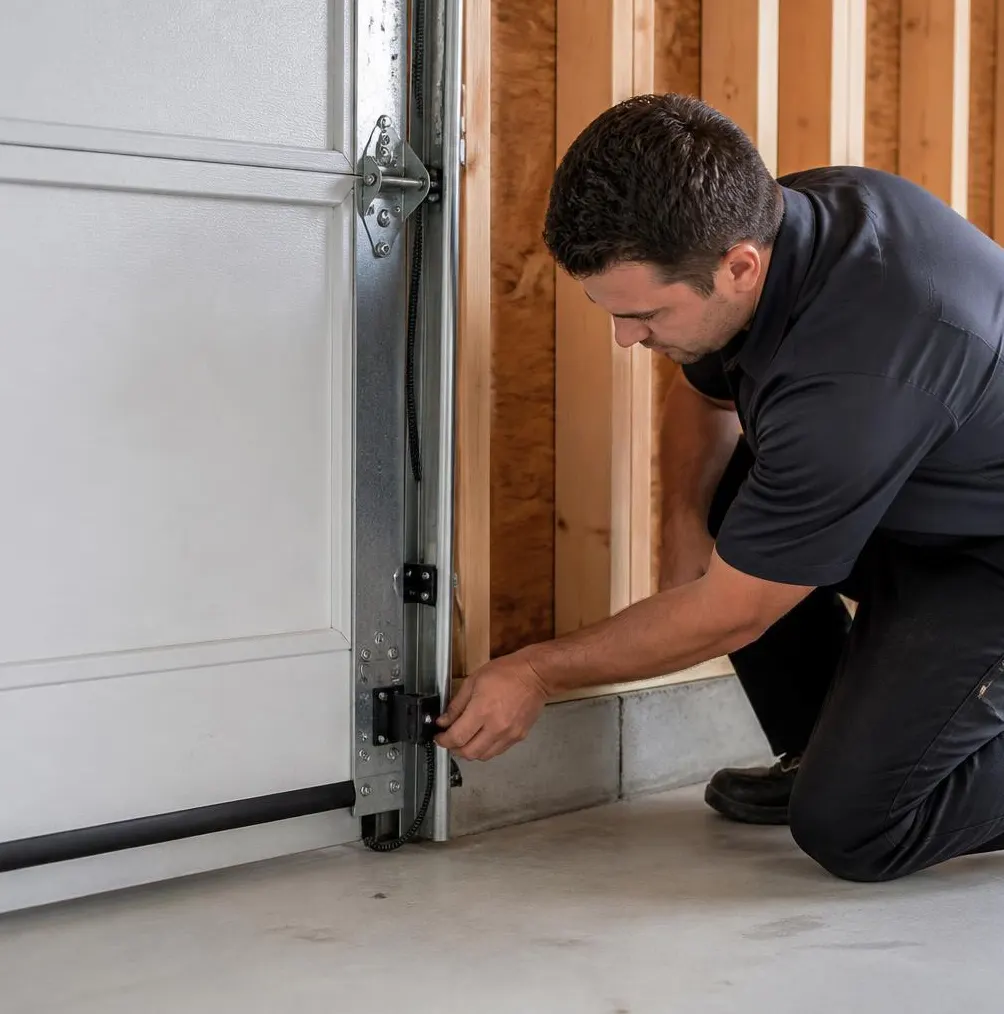
What another season of guessing costs you
Leave your opener's force and travel limits set wrong through one more Central Valley winter, and you're not just risking an annoying squeak. You're risking a cracked panel from a door that slams the floor too hard, a stripped drive gear from motor strain, or a door that reverses every single time it tries to close because it thinks it hit something. Replacing a panel runs several hundred dollars in national ranges; a new opener runs more. A five-minute check now is cheaper than either.
This is also the argument that never seems to end in a lot of households: one person thinks the door is "just being weird," the other is convinced it's broken and needs replacing. Usually it's neither. It's a setting.
Force limits and travel limits, explained without the manual
Every garage door opener has two settings that control how it behaves, and most homeowners never touch them after installation.
Travel limits
This tells the opener exactly how far to move the door — where "fully open" ends and where "fully closed" ends. If the travel limit for closing is set too short, the door stops a few inches above the floor, leaving a gap. Too long, and the opener keeps pushing after the door is already seated, straining the motor and the track.
Force limits
This tells the opener how much resistance it's allowed to push through before it assumes something is blocking the door and reverses. It's a safety feature. If the force is set too high, the opener will push through real obstructions — a bike, a pet, a small child — instead of stopping. If it's set too low, the door reverses constantly for no obvious reason, because normal friction from the rollers or a slightly stiff spring is enough to trip it.
Both settings interact. A door with the wrong travel limit often gets the force cranked up to compensate, which masks the real problem and makes the door genuinely dangerous.
Why the wrong settings do real damage
This isn't just about convenience. Here's what actually happens over time:
- Over-forced doors crush things they shouldn't. A door set to push past resistance will keep pushing into a misaligned track, a frozen roller, or a curled weatherstrip — bending panels and frame hardware in the process.
- Under-forced doors wear out openers fast. Constant reversing means the motor cycles up and down repeatedly, which shortens gear and belt life.
- Wrong travel limits strain springs. If the door is told to travel farther than it needs to, the opener fights the spring tension at the top or bottom of the cycle instead of working with it, which accelerates spring fatigue.
- Gaps at the bottom let in what you're trying to keep out. Dust and wildfire smoke during dry months, driving rain in winter — a door that doesn't fully seat lets both inside.
Why this matters more with our local weather
Garage doors and their hardware respond to temperature and humidity swings more than people expect. Hot inland summers expand metal tracks and can tighten tolerances slightly; winter rain adds moisture that swells wood doors and composite panels just enough to change how much resistance the opener feels on a normal close. A force setting that was fine in August can start causing reversals in December simply because the door itself is sitting differently in its frame. This is also the season dust and smoke residue from the dry months settle into tracks and sensors, adding friction the opener has to push through — which is exactly the kind of resistance a poorly tuned force setting either overreacts to or ignores.
How to check yours (and settle the argument)
- Run the balance test first. Disconnect the opener and lift the door by hand. It should move smoothly and stay put at waist height. If it doesn't, the problem is the door and springs, not the opener settings — fix that before touching anything else.
- Watch a full open-close cycle. Does it fully seat on the floor? Does it stop fully open without straining? Note exactly where it falls short.
- Test the reverse safety. Place a piece of wood flat on the ground in the door's path and close it. The door should reverse immediately on contact, not push through it.
- Adjust in small increments. Most openers have labeled force and limit dials or buttons near the motor unit. Turn or press in the smallest increment available, then retest. Never set force high enough to push through resistance — that defeats the safety feature entirely.
The trade-off: adjusting these yourself is free and quick, but it's easy to mask a mechanical problem (bad rollers, a weak spring, a misaligned track) by just cranking up the force until the door stops complaining. That fixes the symptom, not the cause, and it's how doors end up damaging door frames or trim over time.
When to call Waterford Garage Door
If you've run the balance test, checked the travel limits, and the door still reverses randomly, stalls, or doesn't seat correctly, it's time for a second set of eyes. Our Opener Repair & Installation service includes properly calibrating force and travel settings to the actual condition of your door — not just resetting them to factory defaults that may not fit your hardware. If it's been a while since anyone's looked at the rollers, hinges, and weatherstripping, our Preventive Maintenance visit catches the wear that causes these settings to drift in the first place.
If your opener is fighting your door this winter, call Waterford Garage Door. We serve Waterford, Hughson, Oakdale, Riverbank, Modesto, Ceres, Turlock, and Empire, and we'll get the settings — and the argument — settled.