
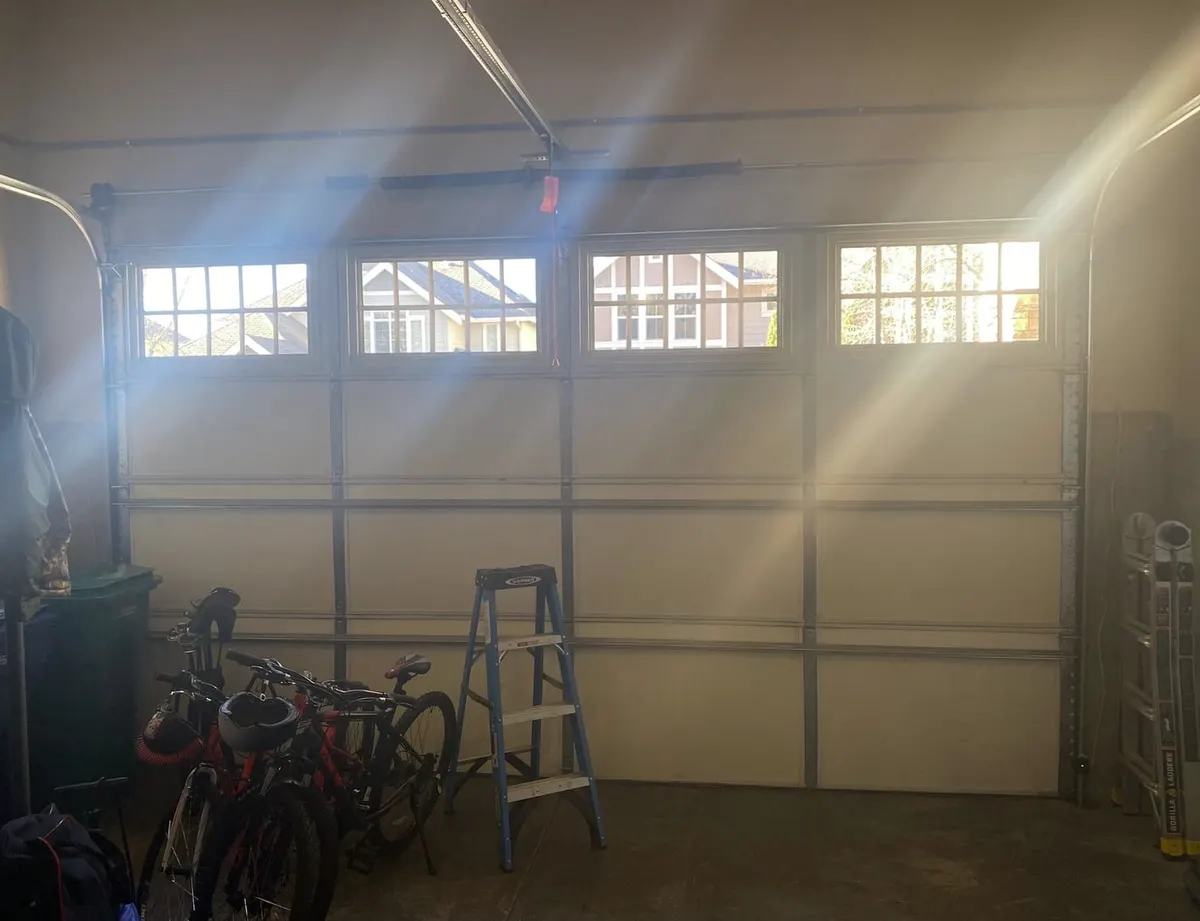
The Mistake Almost Everyone Makes First
Someone hears a squeak or a grinding noise, grabs a can of spray lubricant, and douses the whole door front to back — hinges, track, rollers, and cables included. It's tempting because it's cheap, it's fast, and it usually works, at least for a week or two. The noise goes quiet, everyone feels better, and the argument about whether the door is “fine” or “about to fall apart” gets tabled.
Here's the problem: spray lubricant can hide a failing part instead of fixing it. A roller with a cracked plastic wheel will still wobble and wear unevenly even after you oil it. A cable with frayed strands doesn't need lubricant at all — oil won't stop rust or restore broken wire strands, and spraying it can make the cable slicker and harder to inspect. The noise goes away, but the part underneath keeps getting worse. That's how a quiet, slow problem turns into a loud, sudden one: a door that drops crooked, a roller that pops out of the track, or a cable that snaps while the door is halfway open.
What Rollers Actually Do
Rollers are the wheels that ride inside the metal tracks on each side of the door, letting the panels glide up and down smoothly. Most residential doors use either plastic rollers (cheaper, noisier, shorter-lived) or nylon rollers with sealed bearings (quieter, smoother, longer-lasting).
Signs a roller is wearing out:
- A rhythmic clunk or squeak that happens at the same spot in the door's travel every time
- Visible cracks, flat spots, or chunks missing from the roller wheel itself
- The door looks like it's wobbling slightly as it moves, rather than tracking straight
- Grinding or metal-on-metal sound near the track, which usually means a roller is no longer turning freely and is just dragging
Worn rollers are annoying and they accelerate wear on the track and opener, but by themselves they're not usually dangerous. This is the part of the argument where the spouse who says “it's just noisy” isn't entirely wrong — rollers alone rarely cause a sudden failure.
What Cables Actually Do
This is the part that matters more than people think. The cables run from the bottom corners of the door up to the spring system, and they're what actually hold the door's weight when it's open and help the springs control its descent. If a cable fails while the door is up, that side of the door can drop suddenly and unevenly, which is a real safety risk, especially with kids, pets, or vehicles underneath.
Signs a cable is failing:
- Visible frayed strands, kinks, or rust spots on the cable itself
- The door looks slightly crooked or hangs unevenly when closed
- A popping or snapping sound during operation
- One side of the door seems to move faster or slower than the other
Cables are under constant tension from the spring system, which is exactly why this is not a DIY fix. Loosening, adjusting, or replacing a cable without releasing that tension safely can cause serious injury. If you can see fraying, that's the signal to stop using the door and call for a repair, not to lubricate and hope.
Why This Shows Up More Here
Dry, dusty inland summers coat tracks and rollers in fine grit that works like sandpaper on moving parts, which speeds up roller wear faster than in damp coastal climates. Then winter rain and humidity swings bring moisture that settles into cable strands and rusts them from the inside out, especially on older doors that haven't been inspected in a while. That combination — dust wear in summer, rust risk in winter — means garage doors in this part of the Central Valley often need more frequent visual checks than the manufacturer's generic maintenance schedule assumes.
A Quick Test You Can Do Together
With the door closed and the opener unplugged, stand back and look at both cables from a safe distance — don't touch them. Check for:
- Any strands sticking out or unraveling
- Rust discoloration along the cable length
- Visible slack or looseness on one side compared to the other
If everything looks clean and tight, the noise is probably rollers, and that's a lower-stakes repair. If you see fraying, rust, or unevenness, stop opening the door with the opener until it's checked, and settle the argument in favor of calling someone.
When to Call Waterford Garage Door
If you're seeing frayed strands, rust on the cables, or a door that hangs crooked, that's a job for our Garage Door Repair service — cable replacement requires releasing spring tension safely, which isn't a weekend project. If the noise turns out to be worn rollers and the rest of the hardware checks out fine, we can usually handle roller replacement during the same visit and fold it into a broader Preventive Maintenance check, so you're not paying for a separate trip every time something squeaks. We serve Waterford, Hughson, Oakdale, Riverbank, Modesto, Ceres, Turlock, and Empire, and we show up with the parts on the truck for most common roller and cable repairs.
If your garage door in Waterford, CA is squeaking, hanging crooked, or just hasn't been looked at in a while, call Waterford Garage Door and we'll settle the argument for you — for real.